


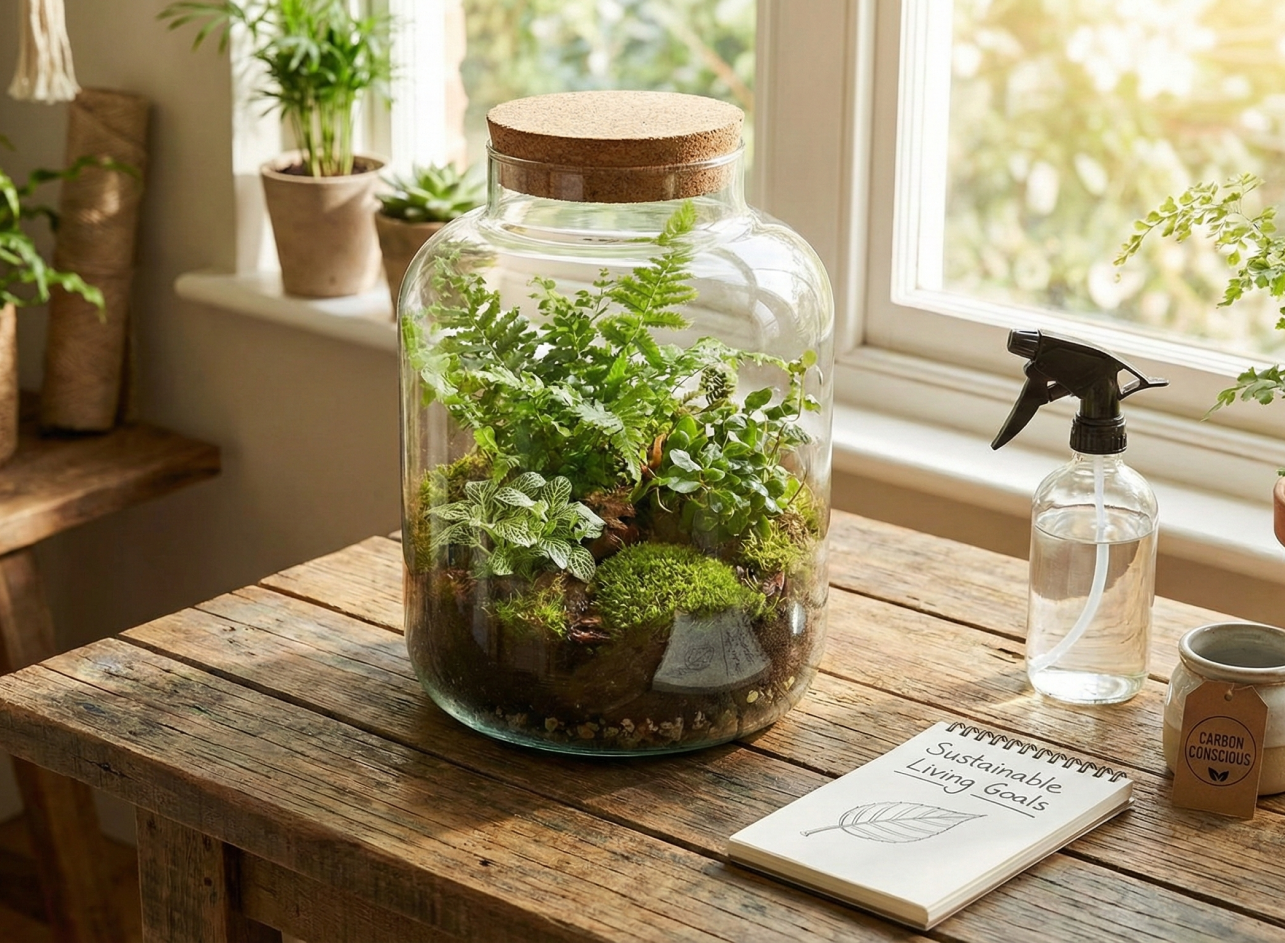
Green Living in the Concrete Jungle: Why the Terrarium is the Future of Sustainable Decor
We live in an era of “fast” everything. Fast fashion, fast food, and unfortunately, “fast decor.” We buy plastic trinkets that end up in landfills, and we purchase cut flowers that wilt in days, wrapped in layers of non-biodegradable cellophane.
As we become more conscious of our impact on the planet, many of us in India are asking: How can I make my home greener, not just in color, but in spirit?
At Mistileaf, based in the bustling heart of Kolkata, we believe that sustainability doesn’t always require grand gestures like installing solar panels or going off-grid. sometimes, it starts with a small glass jar on your desk.
Terrariums are more than just beautiful aesthetic pieces; they are a lesson in sustainability. They are self-contained ecosystems that model how our planet should work—efficient, cyclical, and low-waste. Here is how choosing a terrarium over other decor options helps you reduce your carbon footprint.
1. The Water Conservation Champion
In many Indian cities, water scarcity is a growing reality. Traditional indoor plants can be thirsty. If you have a balcony full of pots, you know the amount of water required to keep them alive during a scorching summer can be significant. Much of that water drains out the bottom or evaporates before the plant can use it.
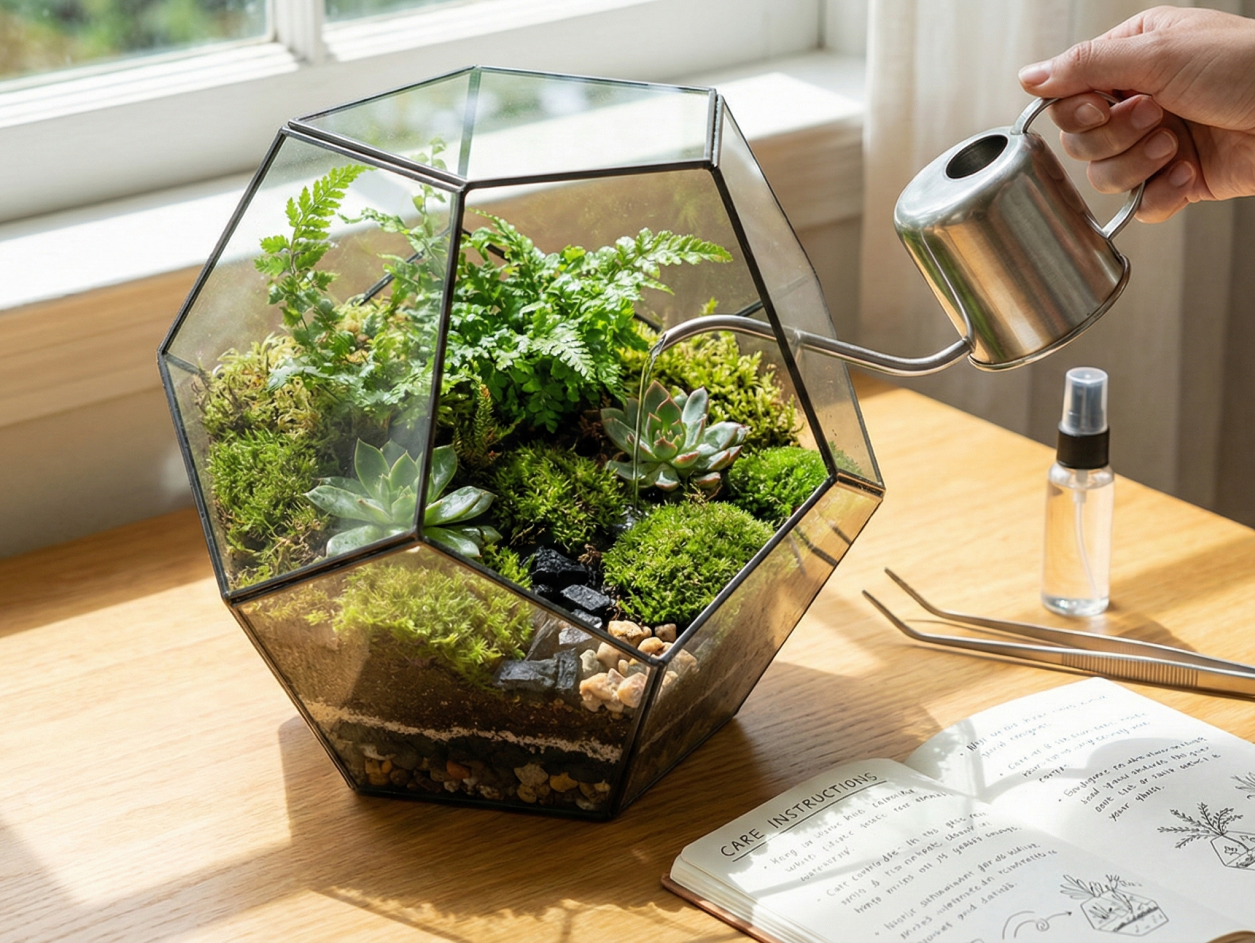
A closed terrarium (like the ones we specialize in at Mistileaf) is a masterclass in efficiency. It creates a closed hydrological cycle.
- The plants take up water through their roots.
- They release moisture through their leaves (transpiration).
- The moisture condenses on the cool glass walls.
- It drips back down into the soil to be used again.
Because of this cycle, a closed terrarium requires 90% less water than a standard potted plant. You might only water it a few times a year. By choosing a terrarium, you are choosing a method of gardening that respects water as a precious resource.
2. Breaking the “Cut Flower” Carbon Cycle
We often think of flowers as the ultimate eco-friendly gift. They are natural, right? Unfortunately, the cut-flower industry has a massive carbon footprint.
Most commercial flowers are grown in energy-intensive greenhouses (often using pesticides), refrigerated to keep them fresh, flown across the world or trucked across the country in temperature-controlled vehicles, and finally wrapped in plastic sheets. All of this energy usage for an item that is discarded in the trash bin within 5 to 7 days.
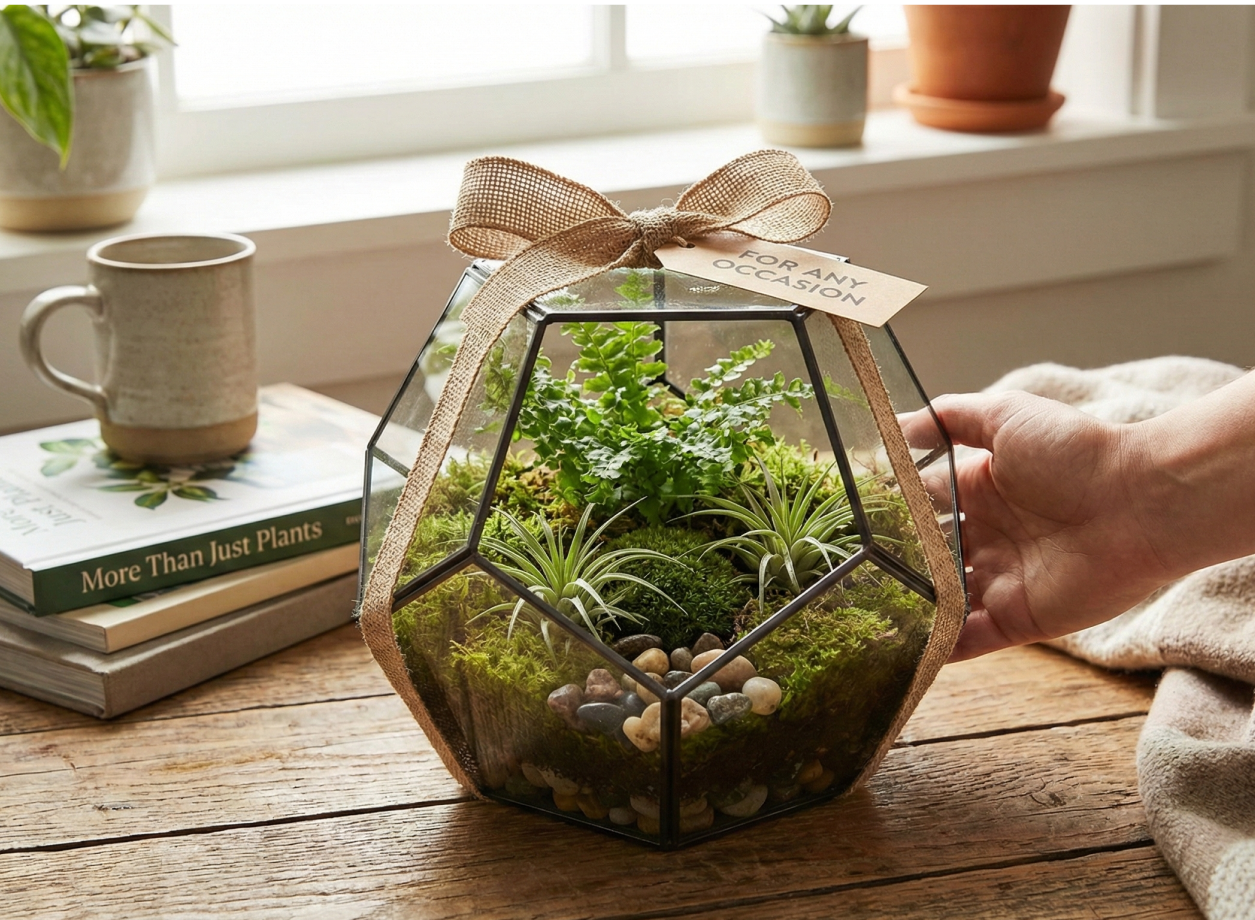
Compare this to a Mistileaf terrarium. It is a “slow gift.” It is designed to live for years, potentially decades. By gifting a living ecosystem instead of a dying bouquet, you are stepping out of the cycle of disposable consumption. You are buying once and enjoying for a lifetime, which is the core principle of sustainability.
3. Glass vs. Plastic: The Material Matters
Walk into any garden center, and you will see a sea of plastic. Plastic nursery pots, plastic faux-plants, plastic watering cans.
Terrariums return to the basics: Glass and Nature. At Mistileaf, our vessels are made of glass—a material that is durable, non-toxic, and infinitely recyclable. Inside, we use natural elements: river stones, activated charcoal, soil, and live plants. There are no synthetic fibers or microplastics shedding into your home environment.
When you choose a terrarium, you are rejecting the “plastic aesthetic” that has taken over modern home decor. You are choosing materials that come from the earth and can eventually return to it without causing harm.
4. Natural Air Filtration (The Micro-Lung)
While one terrarium won’t purify the air of an entire apartment, it contributes to the solution. Indoor air quality in cities like Kolkata can often be poorer than outdoor air due to “off-gassing” from paint, furniture, and cleaning products (VOCs).
The plants inside your Mistileaf terrarium—whether they are Fittonias, Ferns, or Mosses—are constantly working. They absorb carbon dioxide and release oxygen. They actively pull toxins into the soil where microbes neutralize them. By filling your home with living plants rather than inert decor, you are creating a healthier micro-climate for yourself and your family.
5. Supporting Local and Reducing “Decor Miles”
Sustainability is also about where you buy. When you buy mass-produced home decor from big-box international retailers, those items have likely traveled thousands of miles on container ships, burning fossil fuels every step of the way.
Mistileaf is proudly homegrown. Based in Kolkata, we source our materials locally and curate our plants from local nurseries whenever possible. By supporting a local Indian brand, you are significantly reducing the “transport miles” attached to your purchase. You are supporting the local economy and reducing the global emissions associated with international logistics.
The Mistileaf Promise
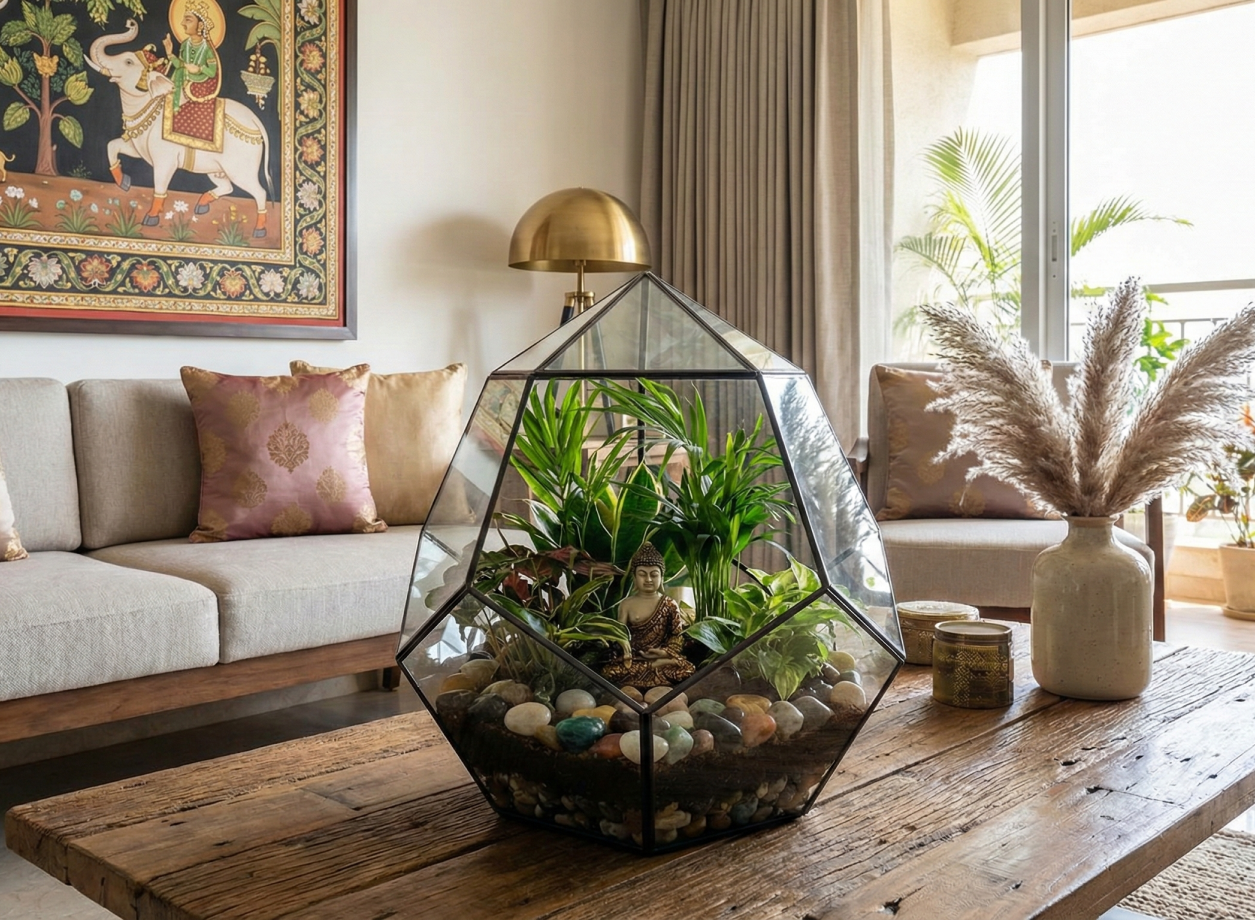
We believe that luxury and sustainability can coexist. You don’t have to sacrifice style to be eco-friendly. A terrarium is sophisticated, modern, and deeply connected to the earth.
In a world that is constantly urging us to buy more, use more, and throw away more, a terrarium sits quietly behind its glass, recycling its own water and growing at its own pace. It is a daily reminder that we can live beautifully with less.
Ready to start your sustainable gardening journey? Browse our “Eco-Collection” at Mistileaf today and bring a piece of the eternal cycle of nature into your home.
If this guide inspired you to begin your succulent journey, take a look at our lovingly handcrafted terrariums at Mistileaf.
🌿 Browse our collection: https://mistileaf.com/products
Love plant inspiration and terrarium ideas?
🌿 Join us on Instagram: https://www.instagram.com/misti.leaf/